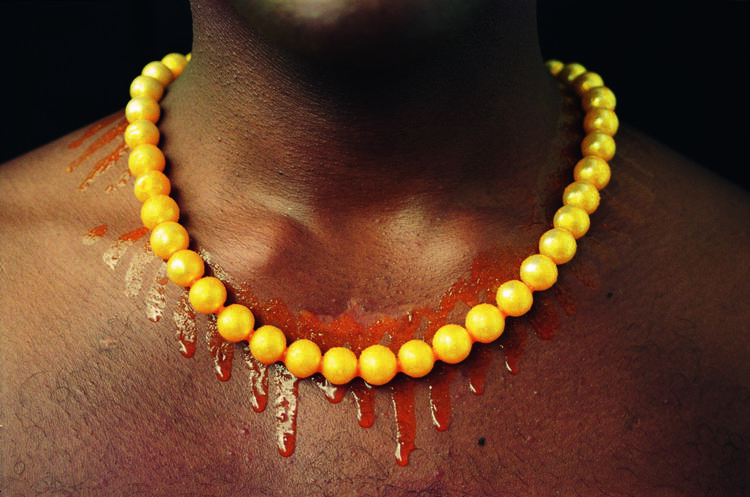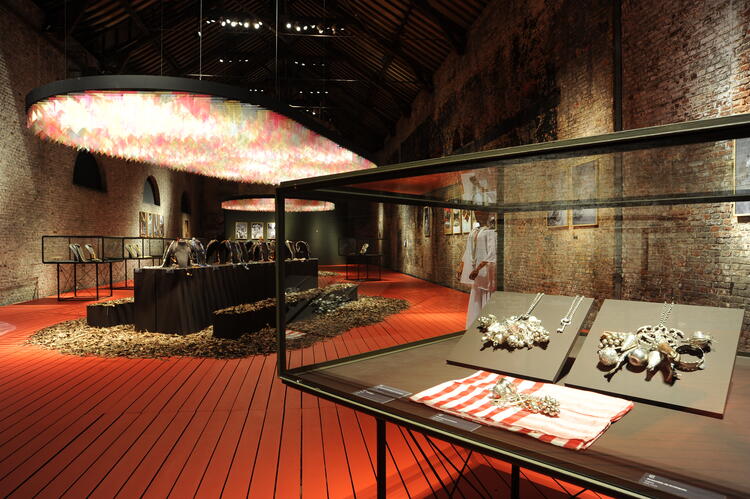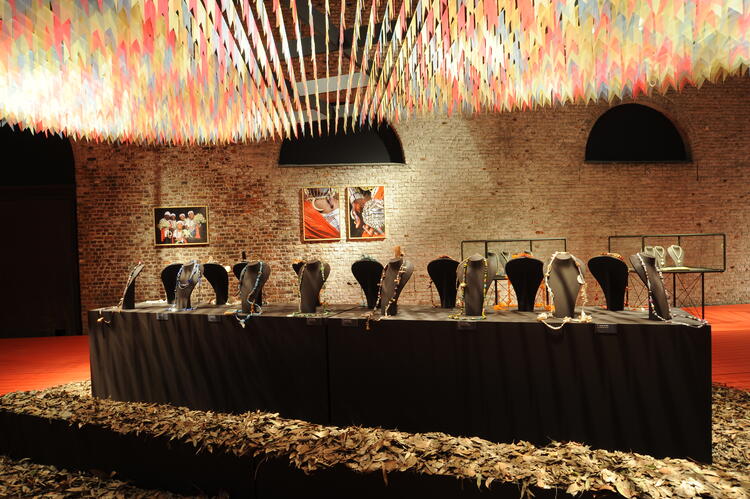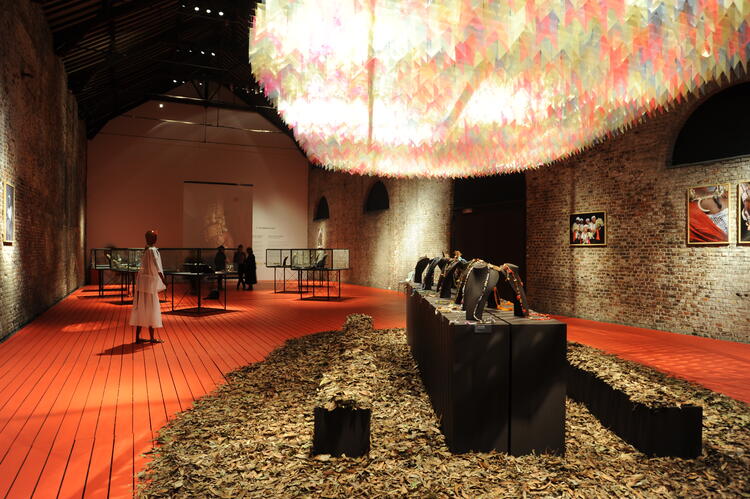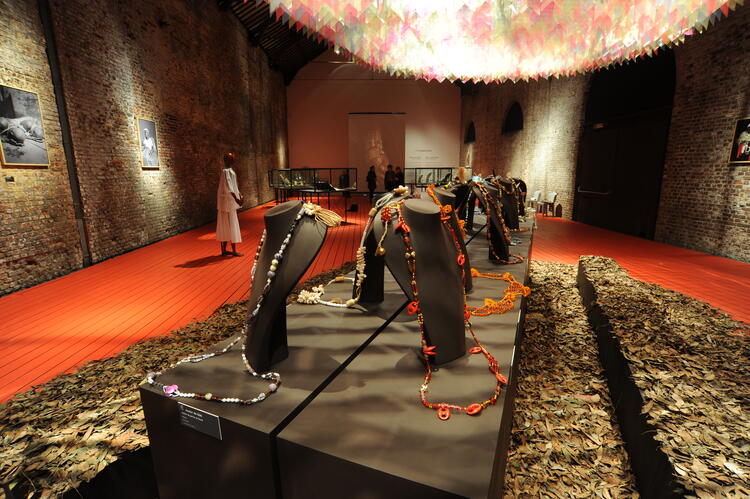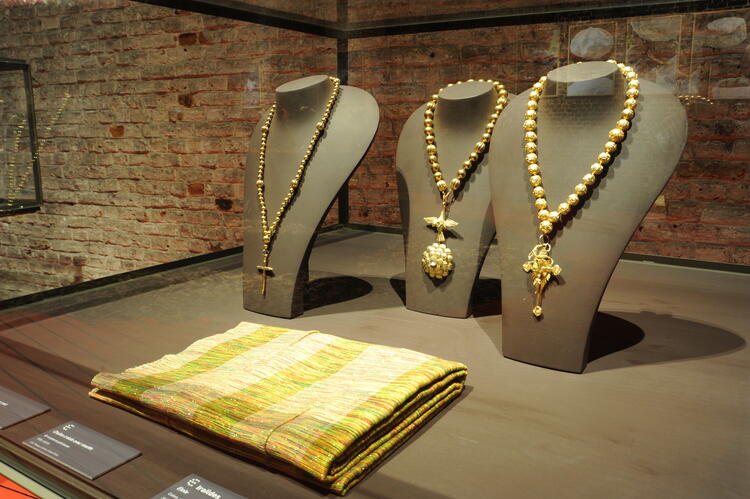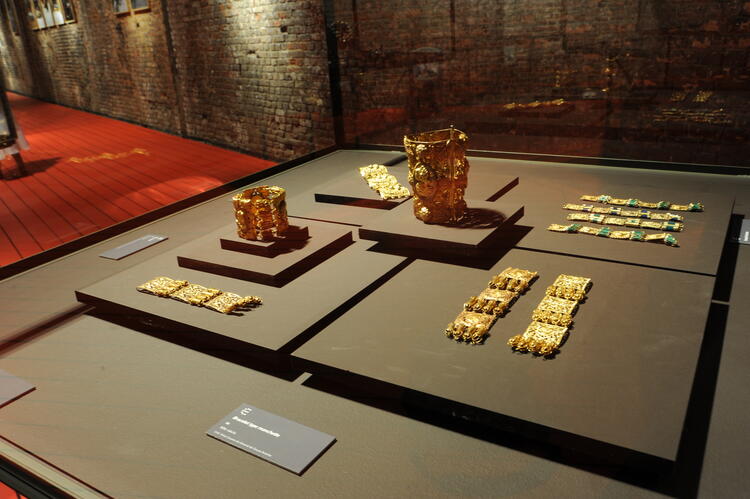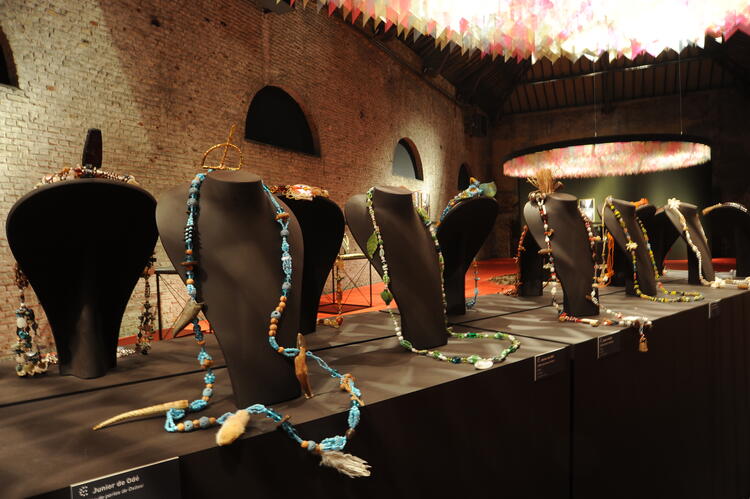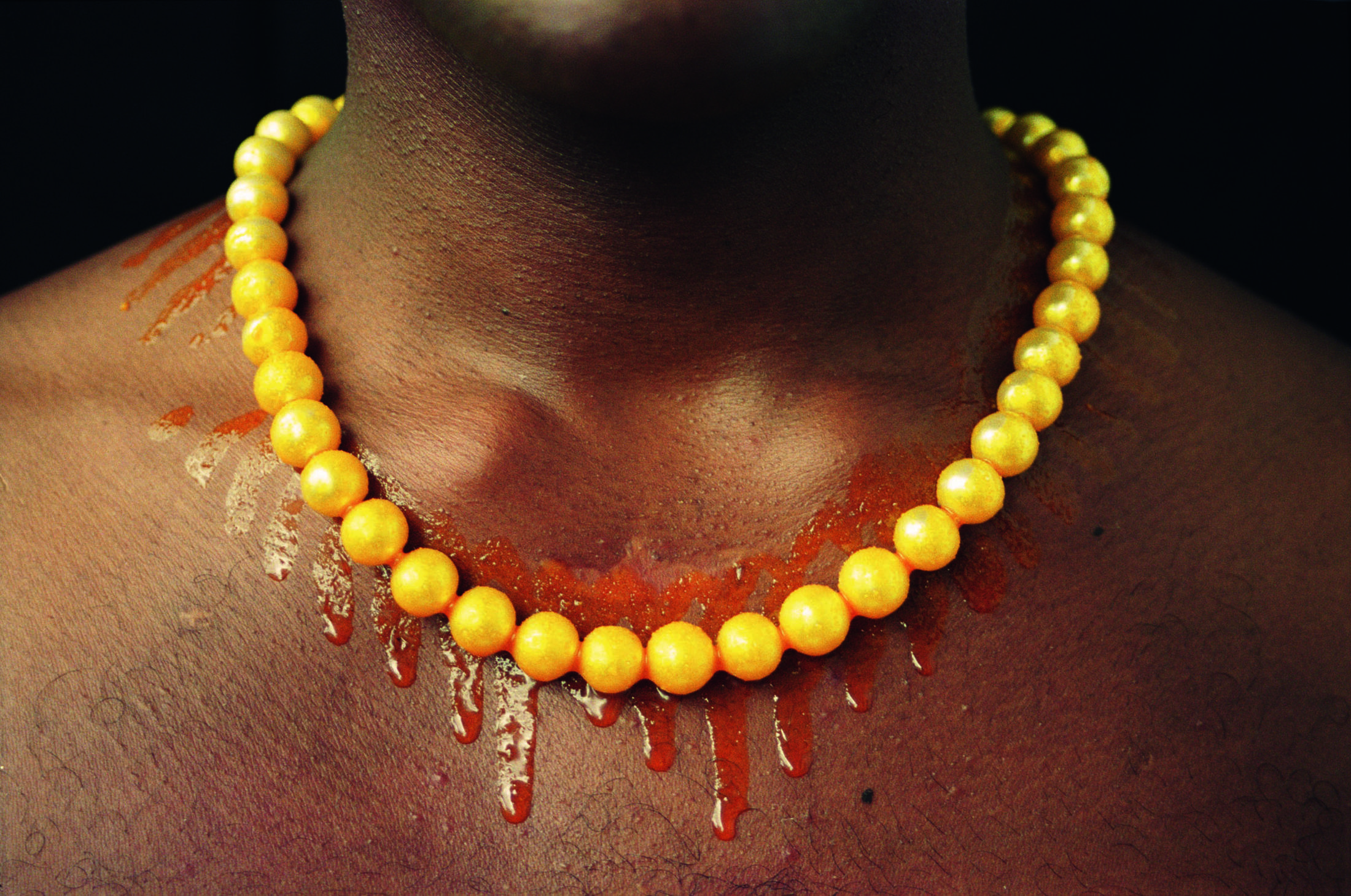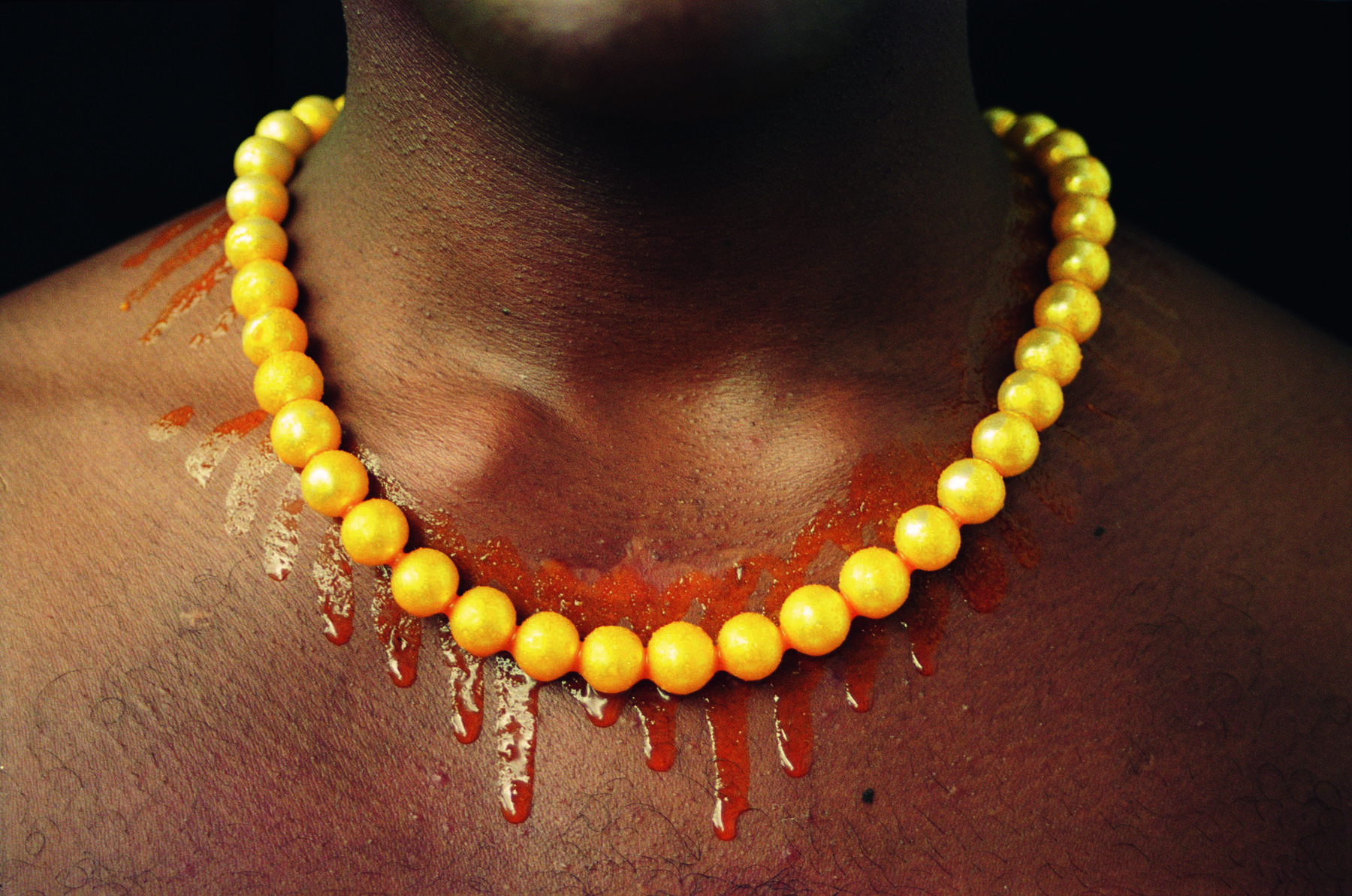

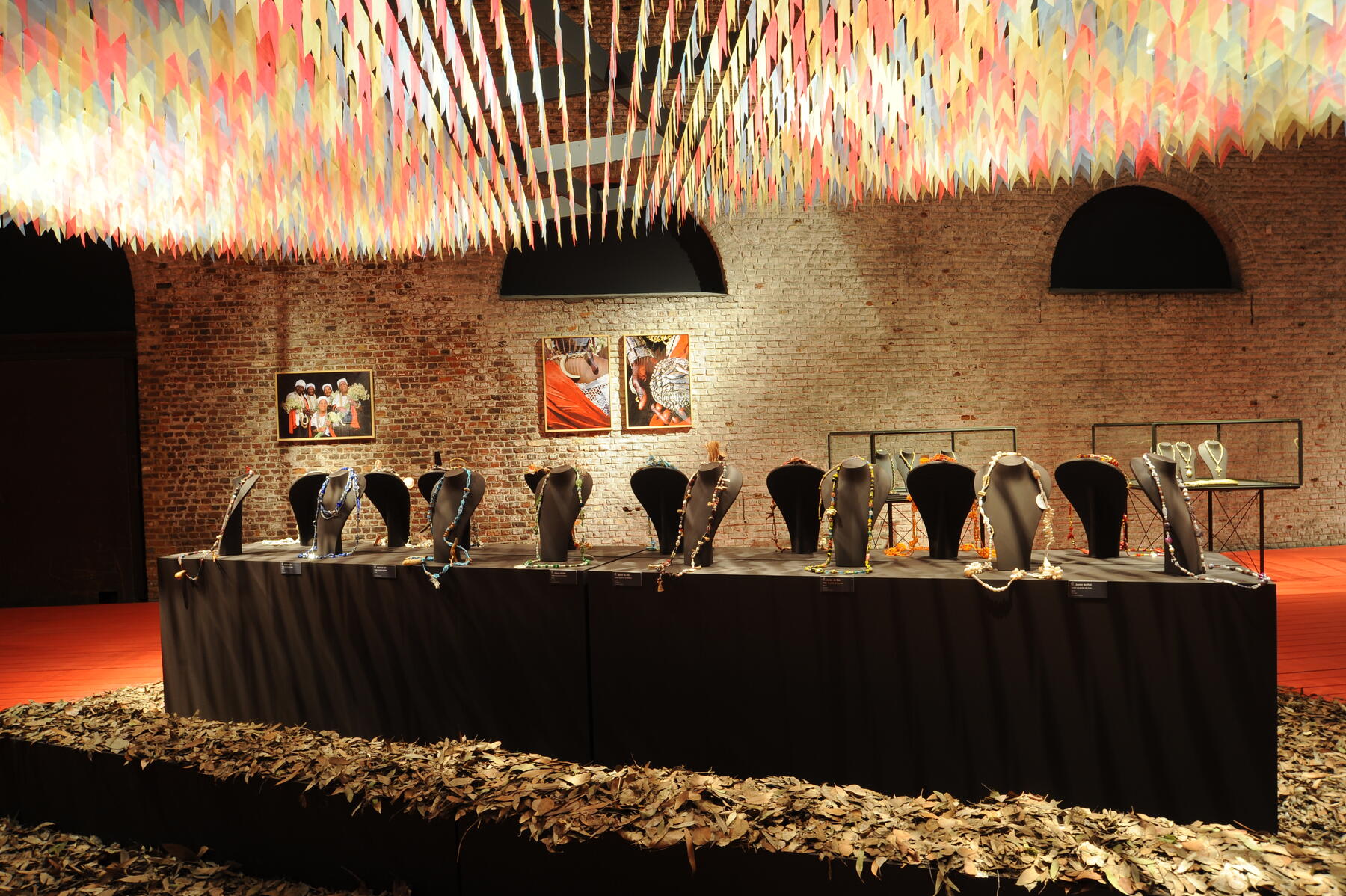
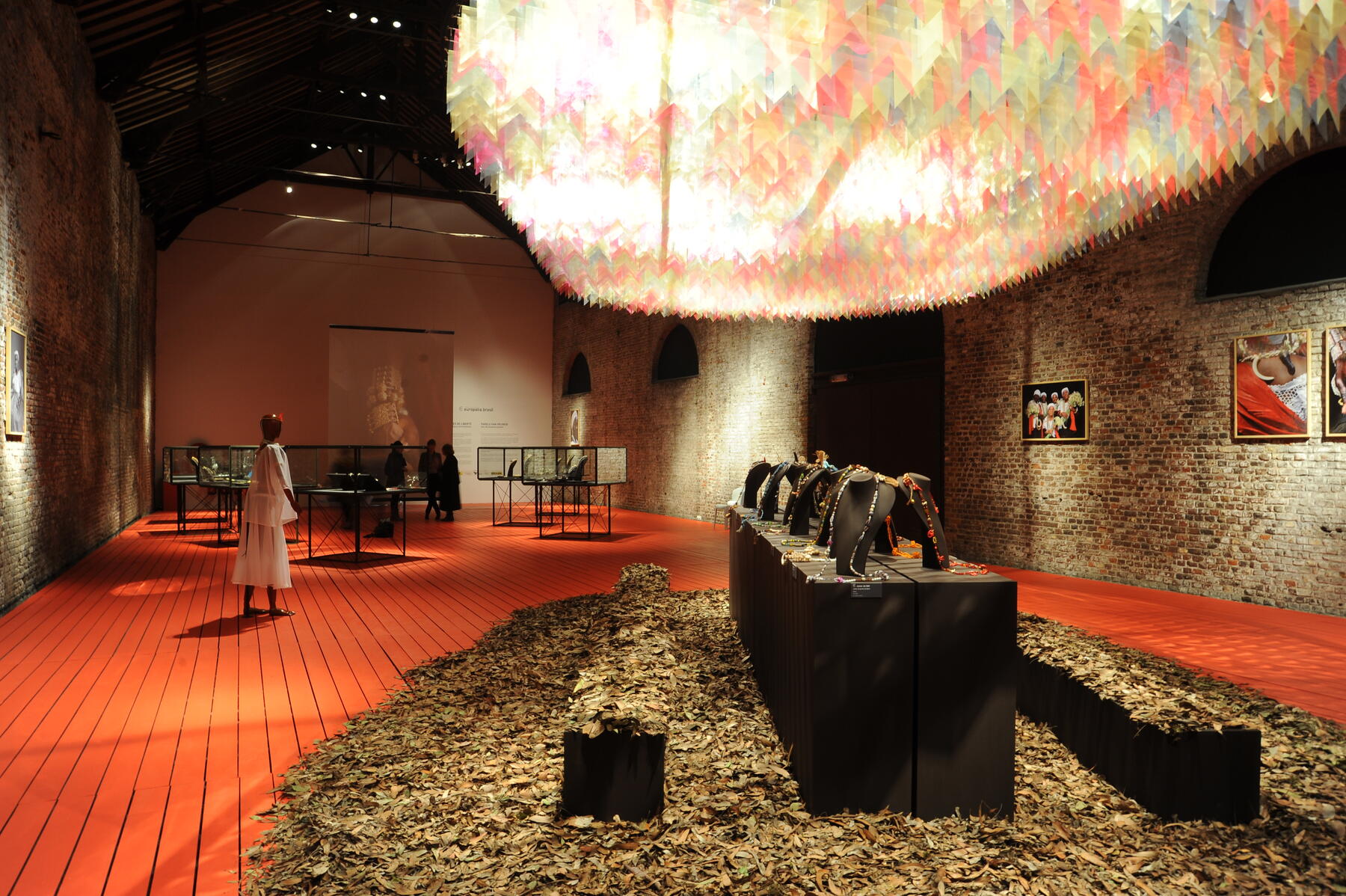
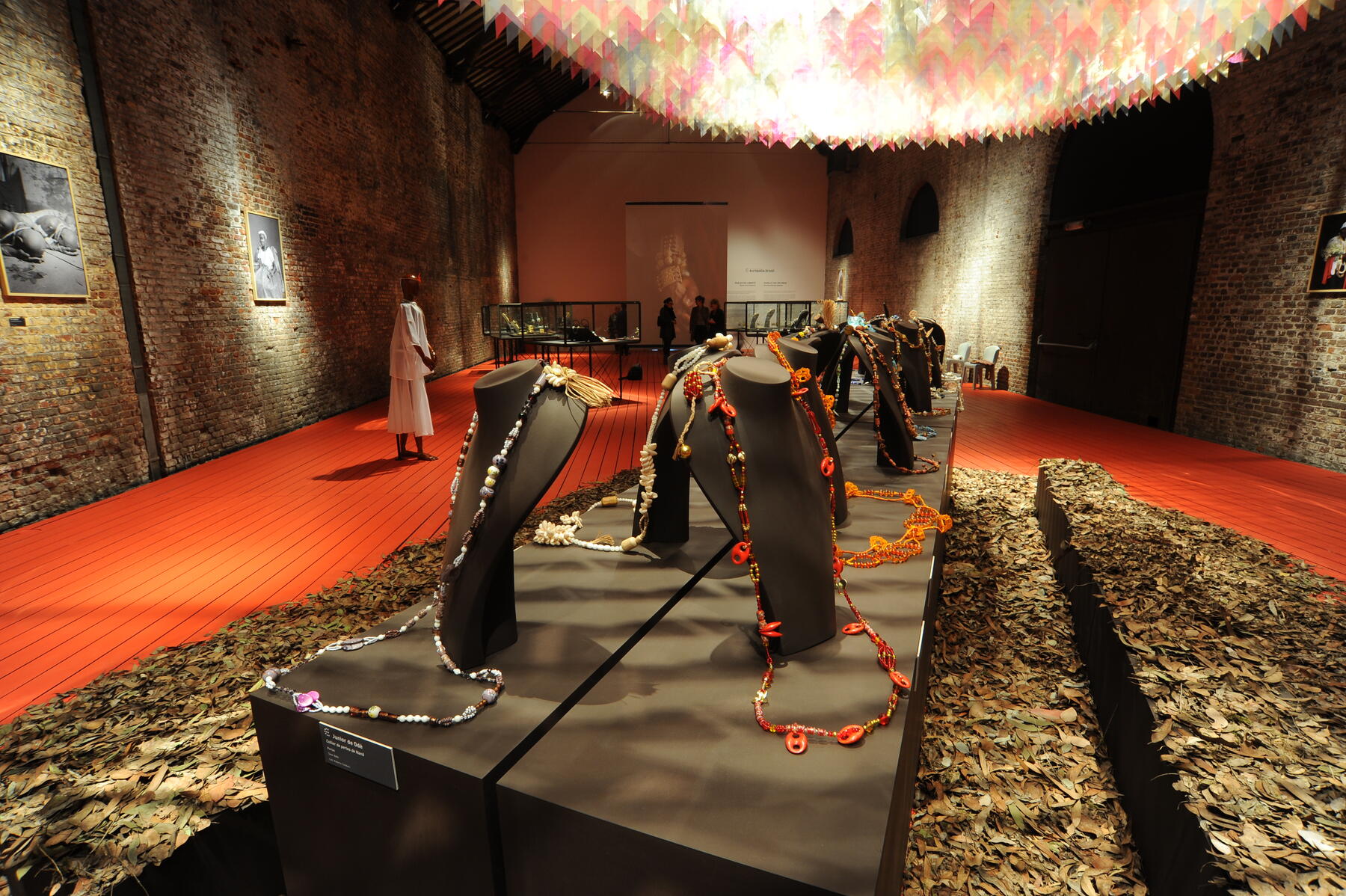

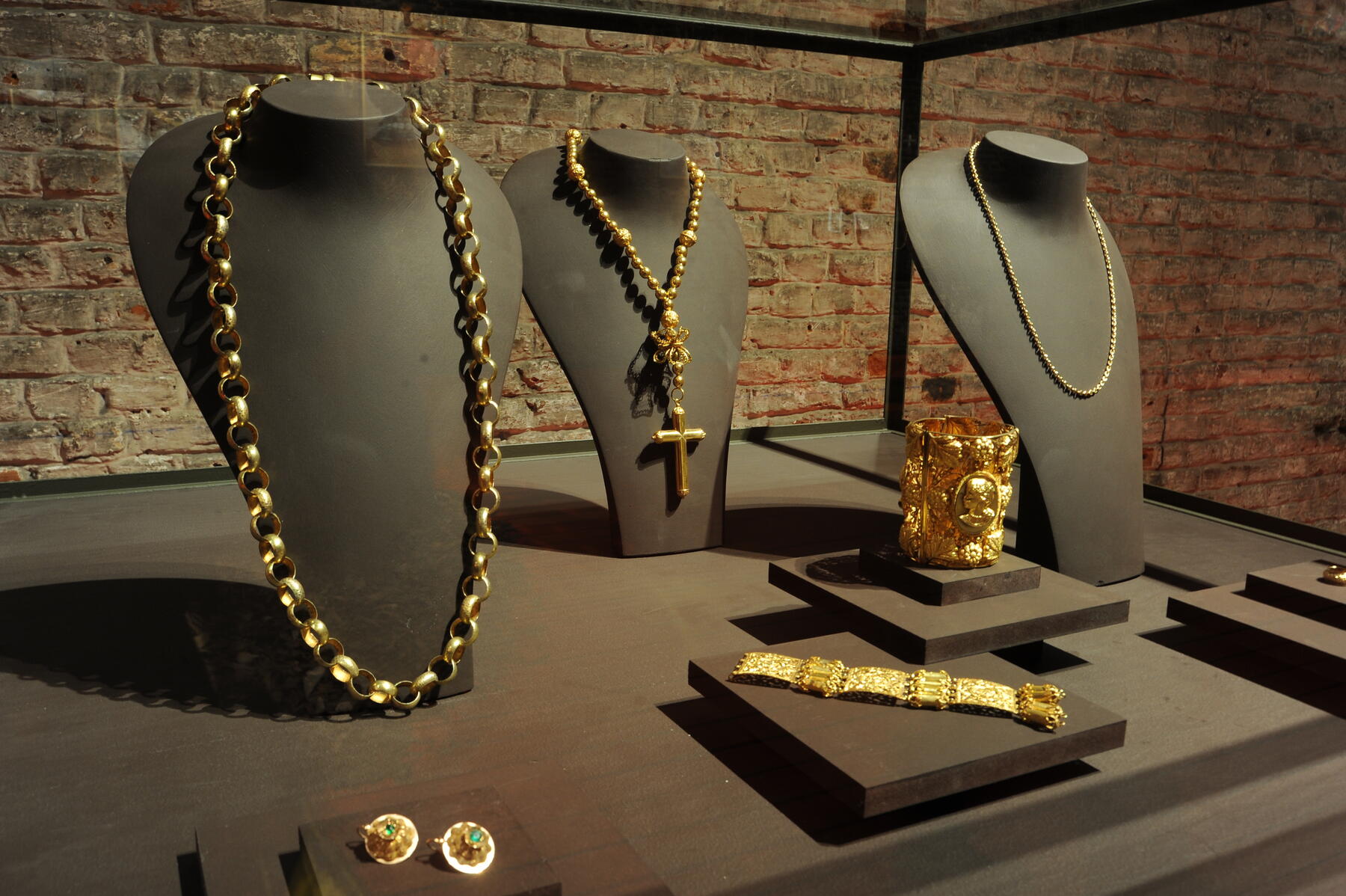


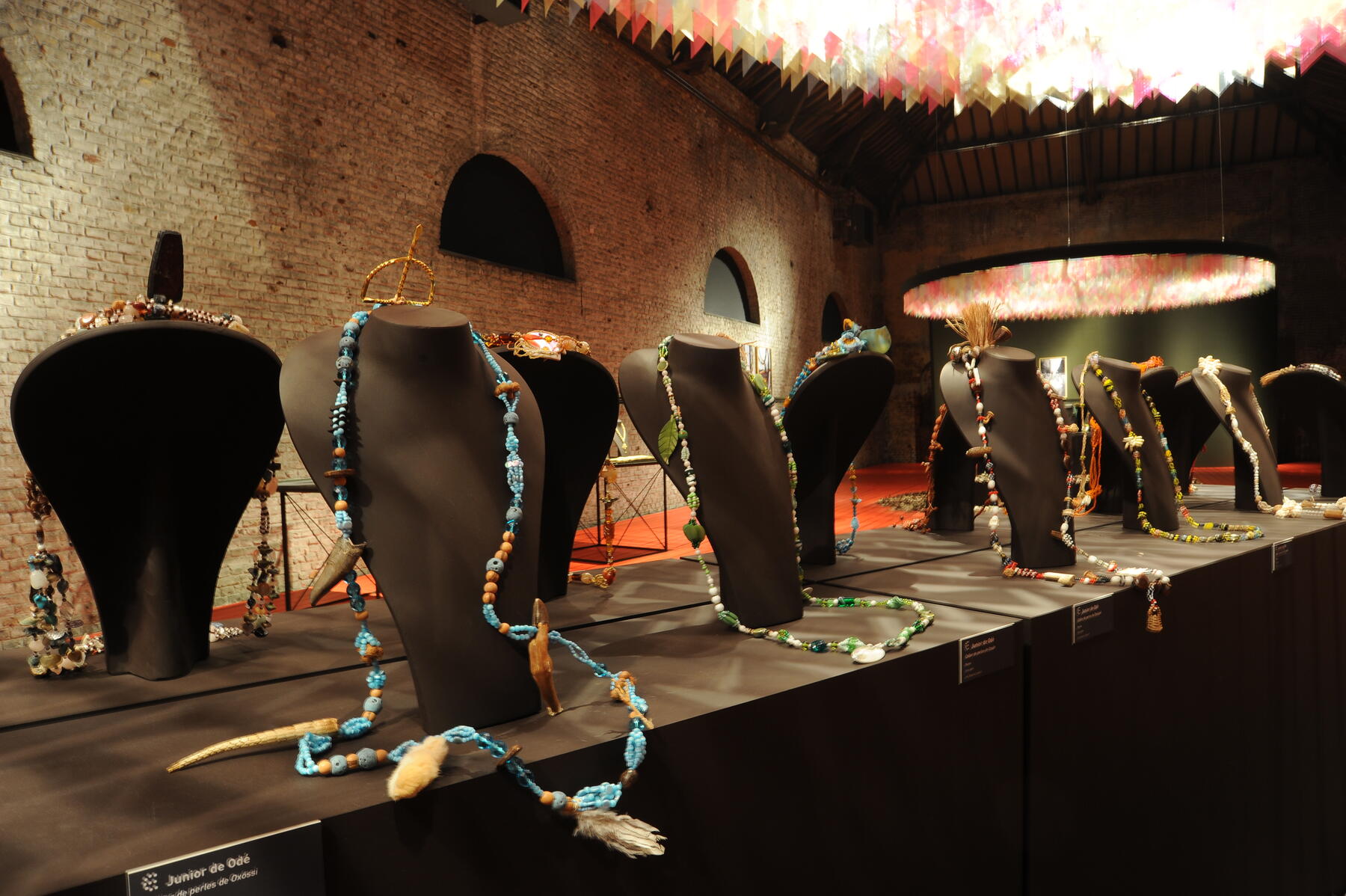
As part of Europalia Brazil, Grand-Hornu Images presented a unique exhibition dedicated to Afro-Brazilian jewellery, both historical and contemporary.
Created and worn by slaves as symbols of recognition and emancipation, or inspired by the deities of their countries of origin, Afro-Brazilian jewellery has always combined a powerful symbolic and emotional significance with a flamboyant aesthetic. The collection of jewellery on display, drawn from public and private collections, was divided into three sections:
Beads of Emancipation
Generally speaking, this refers to jewellery (necklaces, earrings, bracelets, brooches, crosses, amulets) worn during the era of slavery (16th–19th centuries) and even later as symbols of wealth, power and freedom by Black women, whether they were slaves, freedwomen or free women, particularly in Bahia. This section of the exhibition included jewellery worn by members of the ‘Irmandade de Nossa Senhora da Boa Morte’ in Cachoeira.
Sacred Beads
These refer to necklaces used during initiation and the practice of Afro-Brazilian religions in various regions of the country (Batuque, Candomblé, Macumba, Tambor de Mina, Shango) as a means of identification and affiliation with the sacred. Two collections of necklaces were presented: 16 deities from the Ketu tradition, created by Jorge Rodrigues and Junior de Odé, in Rio de Janeiro.
Gems of Brazilian Culture
This section brought together images and sounds of Brazilian artists such as Carmen Miranda, Clara Nunes, Gal Costa, Maria Bethânia, Alcione, Mart'nália and Rita Ribeiro, who still wear necklaces, bracelets and amulets similar to those conceived in the context of slavery and Afro-Brazilian religions.
Moreover, the costumes worn during the samba school parade at the Rio de Janeiro Carnival still incorporate elements derived from this very jewellery. The exhibition also featured photographs by Pierre Verger, Adenor Gondin, José Medeiros, Francisco Moreira da Costa and Ayrson Heráclito.